Lincoln Southeast High School
Class of 1965
Happening in Lincoln Archives
AUGUST 2026
From the Lincoln Journal Star
Nebraska’s Finalists for NASA’s 1985-1986 Teacher in Space Program
Forward – Gregg Wright and I have each had the good fortune to work with Lincoln teacher Jim Schaffer on projects that celebrate Nebraska teachers and students. Jim redirected the national acclaim he received to laud Nebraska educators and the students whose lives they enrich.
NWU Professor & Teach in Space Finalist Reflects on Space Shuttle Disaster
Nebraska's finalists for NASA's 1985–1986 "Teacher in Space" program were Roger Rea from Northwest High School in Omaha and James R. Schaffer from Lincoln East High School in Lincoln. They were among 114 state-level finalists selected for the project before the Challenger disaster, with Rea later recounting the immense pressure of media attention following the 1986 accident.
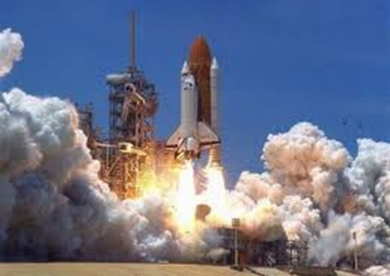
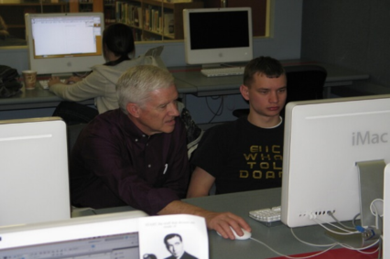
Professor Jim Schaffer was in the running to be the first teacher in space.
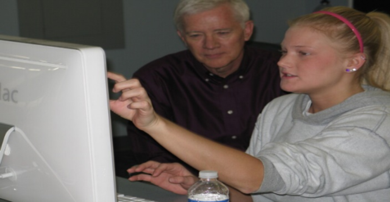
Schaffer said if the Teach in Space Program was active today, he would still go despite the risk.
Friday, January 28, 2011, marks a somber day in American history: the 25th anniversary of the space shuttle Challenger disaster. Those who witnessed the disaster — whether in person or through news coverage — will likely never forget that fateful day.
For one Nebraska Wesleyan University professor, memories of that day are even more poignant. Jim Schaffer, professor of journalism, could have been among the seven killed in the disaster.
“You just didn’t even know what to think,” Schaffer said of the shuttle that exploded just 73 seconds after the launch. “In an instant, it was gone.”
The space shuttle mission marked the first time a civilian went to space as part of President Ronald Reagan’s “Teach from Space” initiative aimed at renewing public interest in the space program.
Schaffer grew up watching Flash Gordon and dreaming of explorations and adventures. He — like most kids at the time — wanted to be an astronaut when he grew up. Eventually his interests led him to a career in teaching. “Teaching is an adventure,” he said. “You’re always learning new things.” So, when he heard about the Teach From Space Program, Schaffer quickly completed the application process, which included several lengthy essay questions. He impressed judges with his ideas on how he would teach from space, demonstrating how he would also serve as an embedded journalist while aboard the shuttle.
Schaffer was one of 100 finalists among the nearly 14,000 applicants. NASA flew the finalists to Washington, D.C. where they consumed themselves with information on space travel. Finalists visited with astronauts who walked on the moon and met President Reagan.
“NASA wanted us to be space ambassadors and go out and visit with groups in our communities to help build more awareness of the space program,” he said. While in Washington, D.C., the finalists went before a final panel of judges who would help select the teacher who would participate. “I just kept thinking, how cool is it to be a teacher and have the chance to fly in space,” said Schaffer. “The longer the selection process went on, the more I would fantasize about what it might be like.”
NASA selected New Hampshire teacher Christa McAuliffe, who Schaffer got to know during the selection process. “She still embraced her inner-child, and I think that’s why the judges picked her,” he said. “She got caught up in the adventure and she would have easily shared that enthusiasm with students.”
Over the years, Schaffer has shared with his students his experience and passion for the space program. Space shuttle photos and books on space travel still decorate his office. Two years ago, he taught a Liberal Arts Seminar for first-year students about the space race, focusing on our country’s race to be the first on the moon. “Times have changed and so have students,” said Schaffer, noting that his students today weren’t even born when the Challenger exploded. “Space travel is no longer as big as it once was.”
Schaffer said the 25th anniversary of the space shuttle disaster is even more bittersweet with the retirement of the shuttle program scheduled for later this spring.
“I understand there are other priorities,” he said. “It is my hope that if our energies aren’t put on the space program that they go to an area that is equally as innovative.”
November 2021
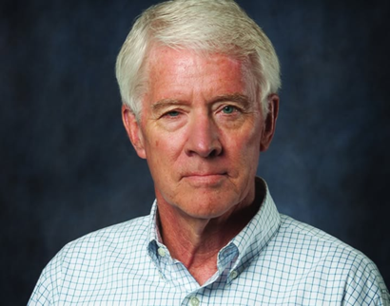
Professor Jim Schaffer retired after 31 years at NWU where he taught news writing, feature writing, print design and photojournalism. He served as the advisor to The Yip, the student newspaper, taught first-year students in the Archway Seminar, and served as chair of the English Department from 2000-2007.
For three decades at NWU, Dr. Schaffer was a powerhouse in the English Department, shaping countless students through courses in writing, literature, and journalism. You know him as the dedicated advisor who pushed the student newspaper and publications staff to find their clear, authentic voices.
He didn't just teach—he helped launch careers and inspire lifelong passions!
JUNE 2026
Remembering Nebraska’s Own Astronaut
Artemis II launched on April 1, 2026, and returned to Earth on April 10, 2026. The nearly 10-day crewed lunar flyby lifted off from Kennedy Space Center in Florida and concluded successfully with a splashdown in the Pacific Ocean off the coast of San Diego.
On the sixth day, 248,655 miles from Earth, Astronauts Jeremy Hansen, Reid Wiseman, Victor Glover and Christina Koch ventured farther from home than any human being who has ever lived.
Have any astronauts been born in Nebraska? The answer is YES. Clayton Anderson is from Ashland (between Lincoln & Omaha), NE.
According to his website, Astro Clay, Anderson spent 167 days in space and 38 hours and 28 minutes in executing six spacewalks.
He applied 15 times before NASA selected him as an astronaut in 1998, and he spent 30 years working for NASA; 15 as an engineer and then 15 as an astronaut.

In this file photo astronaut Clayton Anderson, STS-131 mission specialist, participates in an Extravehicular Mobility Unit (EMU) spacesuit fit check in the Space Station Airlock Test Article (SSATA) in the Crew Systems Laboratory at NASA's Johnson Space Center.

Nebraska astronaut Clayton Anderson unfurls the Nebraska flag he took with him on his Space Shuttle Atlantis flight. Anderson was in the Capitol Rotunda in April 2011, presenting the Legislature with mementos of his space trip.

Astronaut Clayton Anderson watches as a water bubble floats in the mid deck of space shuttle Discovery during the STS-131 mission on April 12, 2010. Note that his image in the bubble is upside down because the bubble refracted the light.

NASA Astronaut Clayton Anderson, STS-131 mission specialist, participates in the mission's third and final session of extravehicular activity (EVA) as construction and maintenance continue on the International Space Station in 2010.

Astronaut Clayton Anderson waves to a parade crowd welcoming him home to Ashland, NE in 2008 after his first space flight.

NASA Astronaut Clayton Anderson, STS-131 mission specialist, is pictured on the mid deck of space shuttle Discovery while docked with the International Space Station in 2010.

President Bush (left) greets Astronaut Clayton Anderson at Ellington Field in Houston on Thursday, Nov. 8, 2007, after Anderson's first return from space.

Astronaut Clayton Anderson takes Ashland-Greenwood elementary students through a shuttle flight, including weightlessness, in 2000.

Clayton Anderson signs autographs for students during the 13th annual Lincoln Public Schools Science Fair held at the Pershing Center in 2008.

At Launch Pad 39A at NASA's Kennedy Space Center in Florida, crew members take time out from their training to pose for a group portrait. Clayton Anderson is at the far right. Space shuttle Discovery awaits liftoff in the background.

Retired NASA astronaut Clayton Anderson gives a speech during the annual federal legislative summit on Aug. 25, 2022, at Strategic Air Command & Aerospace Museum.
(Next Up: Nebraska's finalists for NASA's 1985–1986 "Teacher in Space" program.)
FEBRUARY 2026
YOU MAY REMEMBER….
At the 60th Reunion last year, Wyuka Cemetery Stables hosted classmates and guests,
who heard public art advocate Liz Shea-McCoy and Nebraska’s former Adjutant General
Roger Lempke describe their efforts to save, restore and repurpose the Pershing Mural.
A local nonprofit led a donation-match project just days after our reunion ended.
The LSE Class of ‘65 donated $1827.50 to the Lincoln Community Foundation for the
Pershing Mural Project. Our gift was doubled, so the Pershing Project received $3655.00
from our class.
HERE'S AN UPDATE: Lincoln Journal Star Feb. 22, 2026
'Colors are Exploding’: Inside the Painstaking Pershing Mural Restoration
When Tim Kenny arrived in Nebraska in 1994, his first day in town began with a job
interview for the Nebraska Investment Finance Authority in downtown Lincoln.
Nervous, he decided to take a short walk beforehand to calm himself.
As he turned onto Centennial Mall, a 140-foot mural loomed above him on the side
of the Pershing Center.
“These guys in Nebraska — they’re real serious. They’re serious about their art,”
Kenny remembers thinking.
As southeast Nebraska became home for his family, the Pershing Center grew more
familiar, especially because Kenny spoke there each year to FFA chapters as part of
his work.
“Before the speech, I’d stand out there and deliver my speech to the Pershing mural,”
Kenny said. “And it always said, ‘Good job.’”
Decades later, when the San Antonio native heard about an effort to save the mural
with the Pershing Center set to come down, he felt immediately compelled to help arts advocate Liz Shea-McCoy with the Pershing Mural Historic Preservation Project.

Liz Shea-McCoy, from right, Roger Lempke, Tim Kenny, Mike McCullough and Luke Holle
stand on the Pershing mural assembled in a warehouse in west Lincoln on Feb. 12. The
group has been busy preparing the 763,000 tiles for installation in Wyuka Cemetery
later this year.
In the first, the rescue phase, nearly $900,000 was raised to remove the 763,000 tiles
from the downtown wall. The mural was carefully taken down in one-foot sections using
tack paper and labeled to mark its precise location. Crews then laid the pieces on
4-by-8-foot plywood, and the 190 sheets were transported to a climate-controlled
warehouse for storage.
Last summer, a concrete wall about 50 feet tall, with 40 feet dedicated to the
artwork, was installed at Wyuka Cemetery, the mural’s future home.
Phase two has required about $1 million in funding for restoration as crews clean
and prepare the mural for its new home.
For the past six months, a small crew has worked inside a west Lincoln warehouse
donated by Steve Miers to house the tiles. For most of that time, they only saw the
backs of the tiles until they began flipping each one, revealing the vibrant colors
as they pieced the puzzle together.

Daniel Holle arranges Pershing mural tiles on Feb. 12 at a warehouse in west Lincoln.
“The colors are just exploding,” Kenny said.
The restoration has also allowed the committee to appreciate the mural’s artistry,
symbolism and storytelling. Kenny said there are nods to Nebraska history, detailed
topography, and even touches of humor woven in by the artists.
Committee member Roger Lempke said he was struck by how bright and glossy the
mural looks now that each tile has been cleaned and buffed.
Though often described as 763,000 tiles, Lempke said many of them are actually two meticulously cut pieces, set by each other to soften overall shapes in the mural.
Another difficult task has required tile setter Luke Holle, owner of Superboy Construction,
to color-match replacements for the several hundred tiles lost over time. So far, he has identified 35 distinct colors used in the mural.

Luke Holle is the tile setter for the Pershing mural project.
After cleaning and replacing missing tiles, each tile must be assembled with precise
spacing before being rehung.
While Holle is relatively new to the project, he plays a key role in preparing the tiles for reinstallation.
“If the sheets aren’t perfect, no big deal over 10 feet, but over 140 feet, things can get
really out of control,” Holle said.
He estimates only a few more days of warehouse work remain, though installation
must wait for warmer weather. Holle hopes to begin placing the mural in March or April,
when temperatures consistently stay above 40 degrees.

JANUARY 2026
Happening in Lincoln ----
LSE ’65 classmates in Lincoln have enjoyed First-Wednesday get-togethers since August 2022. When the 55th++ reunion plans were finally cancelled in ‘22, Susie Carlson (Orduna) asked if we could organize an informal monthly gathering. At least for Lincoln folks. Other LSE classes do it. Classmates, who expect to visit Lincoln, can participate, too. We’ve had several out-of-town guests!
Thanks to Susie for urging us to give this a try and to Reunion Committee members who provided helpful feedback.
First-Wednesdays are held every month (excluding holidays) from 9:30 to 11:00 am at Scooters, 4500 South 70h St. [Appx. 1.5 blocks south of Pioneers Blvd. at the north end of a brick “strip mall” building.]
Some folks attend every month. Others work their schedules month-by-month. Great conversation and camaraderie.
If you’re planning a trip to Lincoln and want to check the First-Wednesday schedule, send us an email via the Contact Us tool on the left side of this page or address a message to lse65fight@gmail.com If a phone call is better, please dial 402.423.5595.


2022-2026 Alpha List of First Wednesday Attendees:
Linda Bomberger (Shafer), Susie Carlson (Orduna), Shirley Dahlberg (Dworak), Bob Danley, Joyce Davidson, Bob Findley, Kathy Ewing, Sherrie Gilliland (Geier), Louie Gogela, Mary Gray (Schmuck), Susie Magee (Stroman), Gwen Meister¨, Betsy Jo Pike (Hall), Lynn Purvis (McCown), Walt Radcliffe¨, Bill Roux, Delores Ryman (Oltman), Karen Salisbury (Vetter), Scott Stuart, John Tidball, Cathy Walters (Peterson), Tedda Watts, Nan Webster, Bonnie Wells (Lodwig), Marlene Wuethrich (Frazier), Tom Yaussi, and Pam Zitterkopf (Wurst). ¨In Memory